- Drayage Company By Best
Modern port logistics depends on standardized containers moving quickly between ships, rail terminals, and inland destinations. The most common are 20-foot, 40-foot, and 53-foot containers, which move goods short distances between ports, rail yards, warehouses, and distribution centers.
Understanding which container types are used in drayage helps shippers plan efficient port pickups, avoid terminal delays, and match the right equipment to the cargo.
What’s In This Guide
Quick Facts
✔ Drayage commonly uses 20-, 40-, and 53-foot containers.
✔ Dry containers carry most cargo.
✔ Reefer and flat racks handle specialized freight.
✔ Container choice depends on cargo size, temperature, and handling needs.
✔ Container type affects equipment, scheduling, and terminal coordination.
✔ Choosing the right container helps prevent delays.
The Most Common Container Types Used in Drayage
Standard Dry Containers
Standard dry containers handle the majority of global cargo. These containers are fully enclosed and protect freight from weather, damage, and theft during transit.
The most common sizes include:
- 20-foot containers (TEU)
- 40-foot containers (FEU)
- 40-foot high-cube containers
A 20-foot container is the baseline measurement used in port statistics and logistics planning. A 40-foot container represents two TEUs, which helps standardize container capacity reporting worldwide.
Dry containers are widely used for:
- Palletized retail goods
- Consumer products
- Electronics and appliances
- Industrial parts and materials
- Packaged food products
Because they are standardized and widely available, dry containers are the most frequently transported units in drayage operations between ports and inland warehouses.
Refrigerated Containers (Reefers)
Refrigerated containers, commonly called reefers, are designed to maintain controlled temperatures during transport. They include built-in refrigeration systems powered during ocean transit and often require electrical hookups when stored in terminals or warehouses.
Reefer containers are used for cargo such as:
- Fresh produce
- Meat and seafood
- Dairy products
- Pharmaceuticals
- Temperature-sensitive chemicals
Temperature control is essential for these shipments. Even during short drayage movements, maintaining the correct temperature is critical to prevent spoilage or product degradation.
Open-Top Containers
Open-top containers resemble standard containers but do not have a fixed roof. Instead, the top is covered by a removable tarpaulin.
This design allows cargo to be loaded from above using cranes, which is useful when freight cannot fit through standard container doors.
Open-top containers are commonly used for:
- Industrial machinery
- Heavy equipment
- Steel products
- Tall cargo loads
For port operations that rely heavily on crane loading, open-top containers allow oversized cargo to be transported within a mostly enclosed structure.
Flat Rack Containers
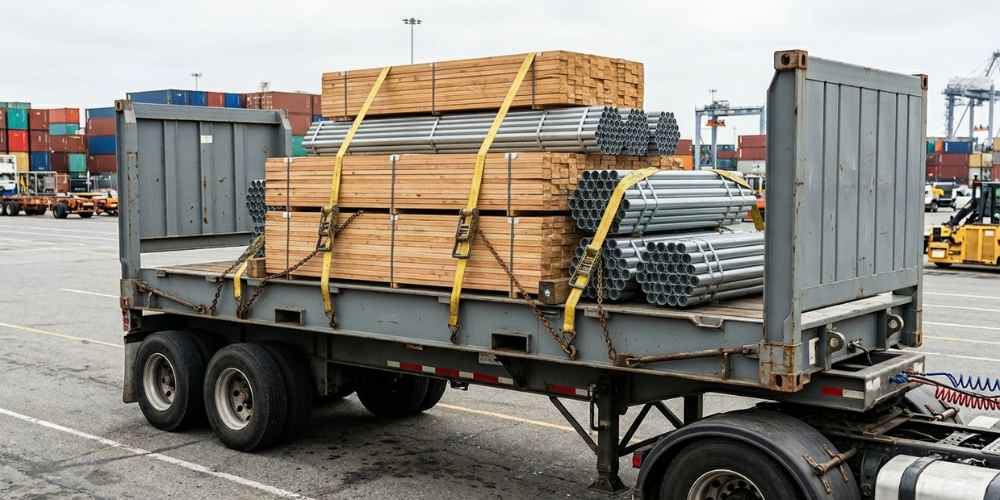
Flat rack containers are used for oversized or irregularly shaped cargo that cannot fit within standard container walls.
These containers have a flat base and two end walls but no side panels or roof. The open design allows cargo to extend beyond the container width or height if necessary.
Flat racks are commonly used for:
- Construction equipment
- Large industrial machinery
- Vehicles and project cargo
- Structural steel or pipes
Because of their open configuration, flat racks often require special handling, securement procedures, and sometimes permit coordination during transport.
Tank Containers
Tank containers are specialized containers used for transporting liquid cargo in bulk.
They consist of a cylindrical tank mounted inside a rectangular frame that matches standard container dimensions. This allows them to move through the same intermodal network as other containers.
Tank containers are commonly used for:
- Liquid chemicals
- Food-grade liquids such as oils or beverages
- Industrial liquids and fuels
The U.S. Department of Transportation regulates many liquid cargo movements, especially when hazardous materials are involved, requiring compliance with specific safety standards.
Bonded Containers and In-Bond Freight
Sometimes the container itself is standard, but the cargo moves under a special customs status known as in-bond transport.
In-bond freight allows imported goods to move from one U.S. port to another or to an inland destination without paying duties immediately, as long as the shipment remains under customs control.
This type of movement is common when cargo arrives at a major port but will clear customs at a different inland location.
How To Choose the Right Container for a Drayage Shipment
Step 1: Identify the Cargo Type
Determine whether the cargo is general freight, perishable goods, oversized equipment, or liquid materials. The nature of the cargo determines whether a standard or specialized container is required.
Step 2: Confirm Dimensions and Weight
Cargo dimensions must fit within container limits. Oversized loads may require flat racks or open-top containers instead of standard dry boxes.
Step 3: Evaluate Temperature Requirements
Products such as food, pharmaceuticals, or chemicals may require temperature-controlled transport. In these cases, refrigerated containers are necessary.
Step 4: Review Customs Status
International shipments may move under customs control or in-bond status before duties are paid. Proper documentation is required to coordinate drayage movements.
Step 5: Verify Equipment Compatibility
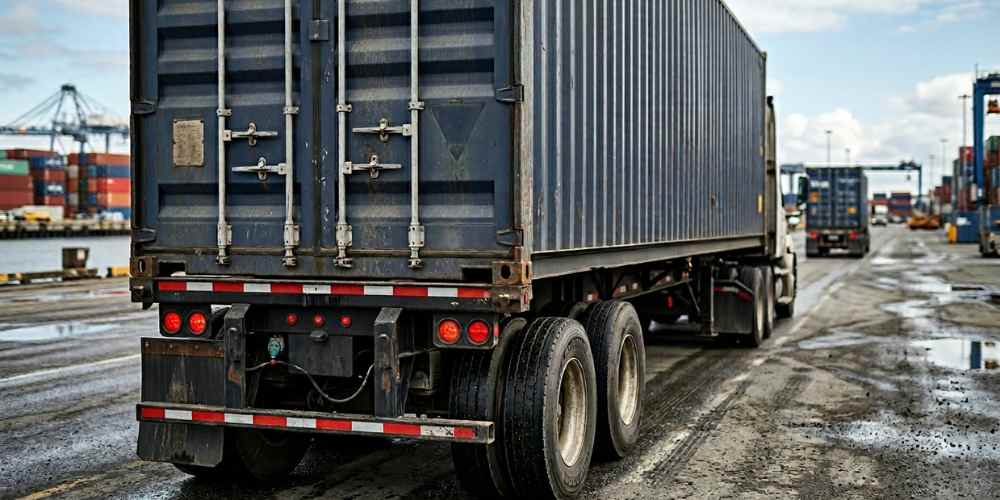
Intermodal containers must be placed on a chassis, which is the trailer designed to transport containers by truck. Intermodal chassis connect containers to trucks during drayage transport.
Frequently Asked Questions (FAQs)
What size container is most common in drayage?
The most common container sizes in drayage are 20-foot, 40-foot, and 53-foot units. The right size depends on whether the shipment is moving through ocean freight, domestic intermodal networks, or inland warehouse distribution.
Are 53-foot containers used in drayage?
Yes. Fifty-three-foot containers are commonly used in domestic intermodal freight, especially for rail-to-warehouse and regional distribution moves within the United States. They are less common in international ocean shipping than 20-foot and 40-foot containers.
Can the same container move by ship, rail, and truck?
Yes. Intermodal containers are built to move across multiple transportation modes without unloading the cargo. A single container can move from an ocean vessel to a chassis, then to rail, and finally to a warehouse or distribution center.
Do all ports handle specialized containers the same way?
No. Port capabilities vary based on equipment, terminal layout, reefer plug availability, cargo handling procedures, and appointment systems. Shippers should confirm terminal handling requirements before scheduling a drayage move.
What should shippers confirm before a container pickup?
Shippers should confirm container size, freight type, terminal release status, appointment timing, chassis availability, weight, and delivery-site requirements. These details help prevent delays, storage charges, and failed pickups.
Partner With a Drayage Provider That Understands Container Logistics
Working with an experienced drayage provider can simplify these logistics.
Drayage Company By Best supports container movements between ports, rail terminals, warehouses, and inland destinations with the operational knowledge needed to handle both standard and specialized container shipments in New York, NY.