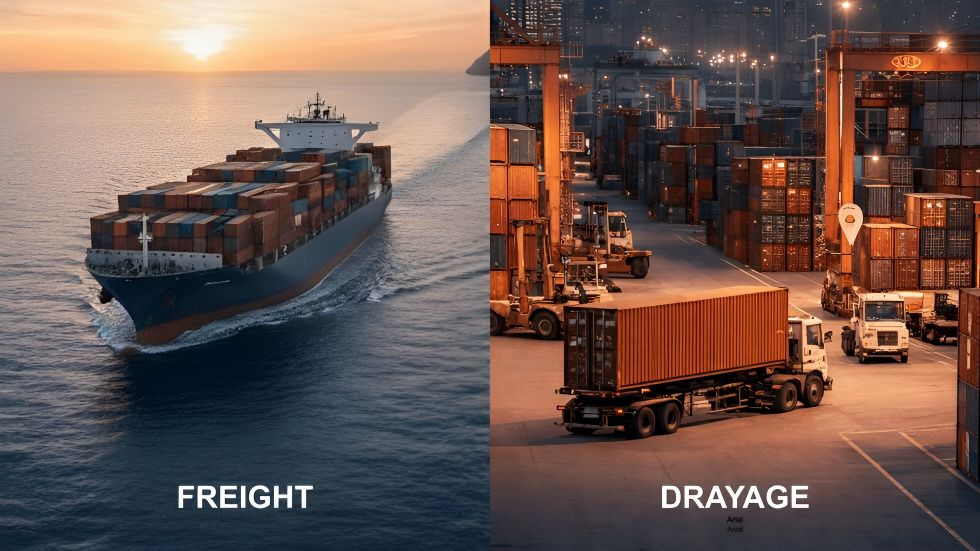
In logistics, the difference between freight and drayage comes down to scale and purpose. Freight is a broad term that covers the movement of goods over short or long distances, while drayage refers to the specialized, short-distance transport that connects those shipments between ports, rail yards, and warehouses.
Understanding how each one fits into the supply chain helps businesses plan smarter and avoid costly delays. In fact, U.S. businesses move more than 12 billion tons of freight valued at roughly $18 trillion each year, making even small inefficiencies in shipping and drayage planning expensive at scale.
Table of Contents
Key Takeaways✔ Freight handles long-distance shipping, while drayage focuses on short, critical moves between transportation hubs. ✔ Cartage focuses on local, last-mile delivery of unpacked or smaller freight within a metro area. ✔ A drayage truck is specially equipped for short-haul container transport, unlike long-haul freight vehicles. ✔ Most businesses need both freight and drayage working together for a smooth supply chain. ✔ Choosing an experienced local drayage provider is especially important in complex markets like NYC. |
What Is a Drayage in Shipping?
In shipping and logistics, the meaning of drayage refers to the short-distance movement of containerized freight between transportation hubs. It typically occurs at the start or end of a longer freight journey and keeps cargo moving between ports, rail terminals, warehouses, and distribution centers.
Drayage plays a critical role in major port regions. In fact, the Port of New York and New Jersey handled more than 6.6 million loaded containers in 2022, which makes efficient drayage services essential for keeping freight moving in and out of the port.
The drayage meaning is straightforward. It is localized, short-haul transport, usually under 100 miles, handled within tight timeframes. The formal drayage definition focuses on efficiency, helping businesses avoid port congestion, storage fees, and scheduling delays.
What Are the Different Types of Drayage Services?
Professional drayage services support different stages of the supply chain, depending on where cargo is coming from and where it needs to go.
Port Drayage
Moves containers between seaports and nearby warehouses or distribution centers.
Intermodal Drayage
Transfers containers between transportation modes, such as ship to rail or rail to truck.
Rail Drayage
Handles short-haul moves between rail terminals and local facilities.
Pier Drayage
Transports containers within ports or between nearby terminals to reduce congestion.
Expedited Drayage
Prioritized drayage for time-sensitive shipments with tight delivery windows.
What Does Freight Mean in Shipping?
In shipping and logistics, freight refers to goods that are transported in bulk for commercial purposes. The term applies to cargo moved over short or long distances using trucks, trains, ships, or aircraft. Unlike drayage, which focuses on short, localized transfers, freight is centered on long-haul transportation between cities, states, or countries.
From a business perspective, freight is the backbone of the supply chain. It allows manufacturers, distributors, and retailers to move large volumes of products efficiently and predictably.
Freight shipments often rely on drayage at ports or rail terminals, but their primary role is distance-based transport rather than hub-to-hub connections.
What Are the Three Types of Freight?
Freight is typically categorized by the mode of transportation used. Each type serves a different business need depending on speed, cost, and distance.
Land Freight
Moves goods by truck or rail across domestic and cross-border routes. Land freight is widely used for regional distribution and large-volume shipments within the U.S.
Air Freight
Used for high-value or time-sensitive cargo that must arrive quickly. Air freight offers speed but usually comes at a higher cost, making it best suited for urgent deliveries.
Ocean Freight
Transports large quantities of goods internationally by ship. Ocean freight is cost-effective for bulk shipments and global trade, though transit times are longer.
Freight vs. Drayage: How They Differ in Practice
Category | Freight Transportation | Drayage Transportation |
Typical Distance | Covers extended routes, often spanning multiple states or crossing international borders | Handles short, localized moves, generally under 100 miles |
Primary Function | Delivers goods from one city, state, or country to another | Transfers containers between transportation hubs such as ports, rail yards, and warehouses |
Common Equipment | Cargo ships, freight aircraft, trains, and long-haul tractor trailers | Specialized drayage truck setups using container chassis |
Delivery Timeline | Planned over longer periods ranging from several days to multiple weeks | Completed quickly, often within a single work shift |
Role in Logistics | Forms the backbone of large-scale distribution and commerce | Acts as the connecting link that keeps freight moving at transition points |
Which Is the Best Shipping Method?
There is no single “best” shipping method that works for every business. The right choice depends on distance, cargo type, timing, and how your shipment moves through the supply chain.
In most cases, businesses benefit from using freight and drayage together, rather than choosing one over the other.
When Freight Is the Best Option
Freight is the better choice when your shipment needs to travel long distances or move at scale. It is ideal for:
- Moving goods between cities, states, or countries
- Shipping large volumes on predictable schedules
- Supporting regional, national, or international distribution
Freight provides reach and capacity, but it often relies on drayage services at ports and rail terminals to keep shipments moving.
When Drayage Is Essential
Drayage is necessary when cargo needs to move efficiently between transportation hubs. Businesses typically rely on drayage when:
- Containers must be transferred from ports to warehouses
- Freight arrives by rail and needs a final short-haul move
- Tight port schedules or congestion require fast turnaround
A reliable drayage truck operation ensures these short moves are completed on time, helping avoid storage fees and delays. Understanding the meaning of drayage helps businesses plan these transitions more effectively.
Frequently Asked Questions (FAQs)
What industries benefit the most from drayage services?
Industries that use ports or rail terminals, such as retail, manufacturing, construction, and e-commerce, rely heavily on drayage services to keep freight moving efficiently.
How does drayage impact shipping costs?
Efficient drayage helps reduce demurrage, detention, and storage fees, while delays can quickly increase overall freight costs.
How is a drayage truck different from a standard freight truck?
A drayage truck is built for short-haul container transport using a chassis, while standard freight trucks are designed for long-distance routes.
Why is understanding the drayage definition important for businesses?
Knowing the drayage definition helps businesses plan short-haul transfers accurately and avoid scheduling and cost issues.
Can small and mid-sized businesses use drayage services?
Yes. Any business moving containerized freight through ports or rail yards can benefit from professional drayage services. It’s best to confirm this with a trusted provider like Drayage Company By Best.
Take the Next Step to Optimize Your Shipping Strategy
Understanding the difference between freight and drayage is more than basic logistics knowledge.
Drayage Company By Best in NYC supports businesses with dependable drayage services focused on accuracy, coordination, and on-time container movement. With experience navigating NYC’s complex logistics environment, our team helps ensure freight transitions smoothly at every stage.