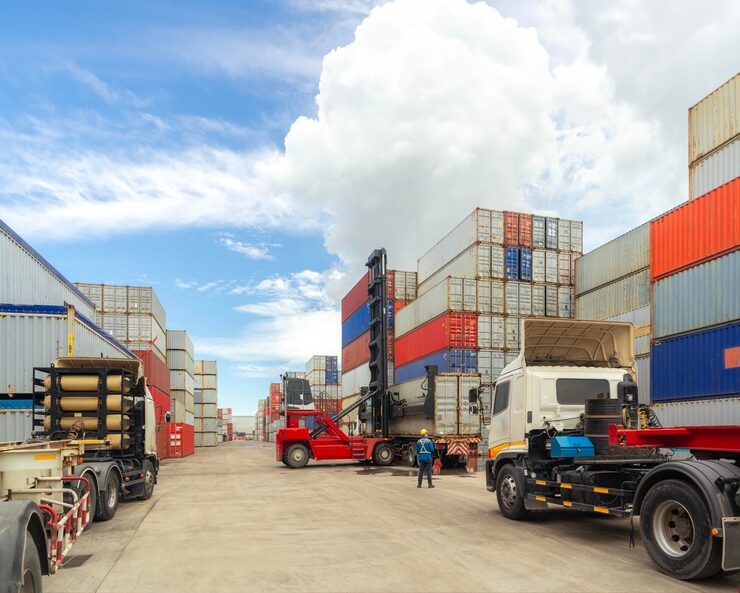
Choosing the right trucking solution depends on how far your freight needs to move and how it’s shipped.
Drayage is used for short moves of full containers between ports, rail terminals, and warehouses; cartage handles local, last-mile delivery of unpacked or smaller loads.
For New York City businesses, knowing the difference and when to use professional drayage services is key to keeping freight moving efficiently.
Table of Contents
Key Takeaways✔ Drayage services handle short-distance moves of full containers between ports, rail terminals, and warehouses. ✔ Cartage focuses on local, last-mile delivery of unpacked or smaller freight within a metro area. ✔ Drayage is a specialized form of trucking that requires port access, chassis equipment, and intermodal coordination. ✔ Efficient drayage reduces container dwell time and helps avoid detention and demurrage fees. ✔ Choosing the right freight solution depends on distance, shipment type, and whether ports or rail hubs are involved. |
What Are Drayage Services?
Drayage services focus on one specific but vital task: moving containerized freight short distances as part of a larger transportation journey. Drayage acts as the bridge between ocean shipping, rail transport, and over-the-road trucking.
With U.S. ports processing roughly 28.1 million TEUs in 2024, every container must move efficiently off the dock. This makes drayage services a critical link between ocean shipping and inland distribution.
Drayage Meaning in Freight and Logistics
The drayage meaning is best understood as short-haul container transport. Drayage typically moves freight:
- From a seaport to a warehouse
- From a port to a rail yard
- From a rail terminal to a distribution center
Unlike general trucking, drayage involves strict port regulations, appointment systems, chassis management, and coordination with steamship lines. It’s a specialized service that requires experience — not just a truck.
Understanding the drayage meaning helps businesses avoid assuming any local trucking company can handle container freight. Many cannot.
How Drayage Services Work in New York City
New York City drayage presents unique challenges. Containers move primarily through the Port of New York and New Jersey, one of the busiest port systems in North America.
Effective drayage services in NYC must account for:
- Port congestion and appointment scheduling
- Chassis availability
- Tight delivery windows
- Local traffic patterns and toll routes
- Compliance with port authority requirements
Experienced providers plan these variables in advance to minimize delays, demurrage, and detention charges — costs that add up quickly when drayage isn’t handled properly.
Understanding Cartage in Trucking
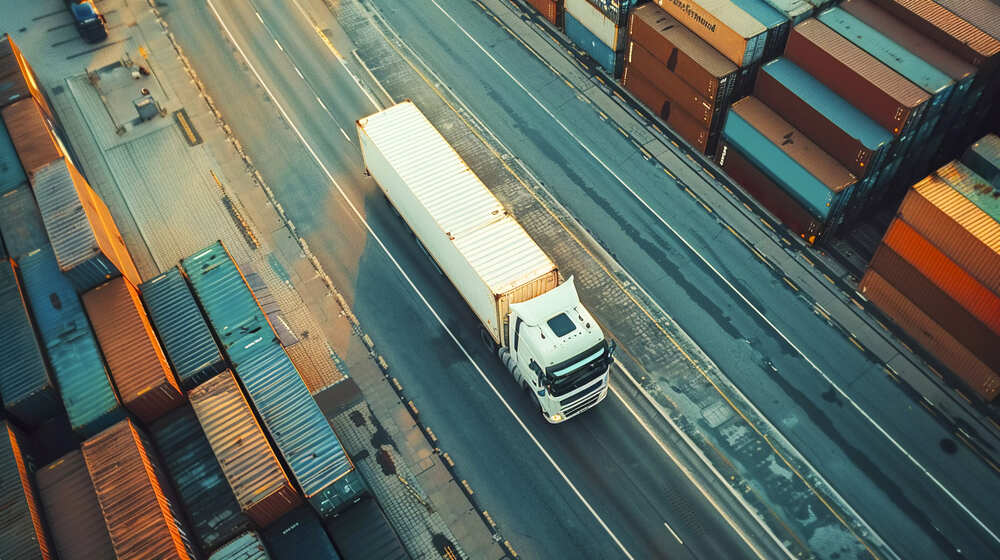
Cartage refers to short-distance trucking that handles non-containerized freight within a city or metro area. While cartage is also local, it serves a very different role than drayage.
Cartage is commonly used for:
- Retail store deliveries
- Construction materials
- Business-to-business local shipments
Unlike drayage, cartage does not involve ports, rail terminals, or ocean containers.
How Cartage Trucking Works
Cartage typically moves goods from a central warehouse or distribution hub to one or more final destinations. Freight is often palletized or unpacked and transported using:
- Box trucks
- Straight trucks
- Cargo vans
When Cartage Is the Right Choice
For businesses focused on local fulfillment, cartage offers speed and adaptability. Cartage works best when:
- Shipments remain within city limits
- Multiple deliveries are required in one route
- Freight does not arrive in sealed containers
How Is Drayage Different From Trucking?
One of the most common misconceptions is that drayage is just another form of trucking. It’s not.
Drayage is a specialized subset of trucking that operates under stricter rules, tighter schedules, and more complex coordination than standard freight hauling.
Key differences include:
- Port access and credentialing
- Container-specific equipment
- Intermodal scheduling
- Greater exposure to demurrage and detention risks
This is why experienced drayage services matter. A general trucking provider may excel at over-the-road freight but struggle with port operations.
What Are the 4 Types of Transportation in Logistics?
Road transportation carries the majority of freight in the U.S., accounting for over 72% of total freight movement, and includes drayage, cartage, and long-haul trucking.
Modern logistics relies on four primary transportation modes:
- Road (including drayage, cartage, and long-haul trucking)
- Rail
- Ocean
- Air
What Is the Most Common Type of Freight?
Globally and domestically, containerized freight is the most common type of freight. Standardized containers make shipping efficient, secure, and scalable — but they also create a direct need for reliable drayage.
Industries that depend heavily on container freight include:
- Retail and consumer goods
- Food and beverage
- Manufacturing
- E-commerce fulfillment
What Is the Most Efficient Freight Transport?
There’s no single answer on what is the most efficient freight transport, as logistics needs vary per operation. Efficiency depends on distance and volume:
- Ocean and rail are most efficient for long distances and high volumes
- Drayage is the most efficient solution for short container moves within intermodal networks
- Cartage excels in local, multi-stop delivery scenarios
Frequently Asked Questions (FAQs)
Do drayage services require special permits or credentials?
Yes. Drayage services typically require port authority credentials, container chassis access, and compliance with terminal appointment systems, which differ from standard cartage or local trucking.
Can drayage and cartage be used together in the same shipment?
Absolutely. Drayage moves the container from the port or rail terminal, while cartage often handles local distribution after the container is unloaded at a warehouse.
Is drayage only used for international shipping?
No. While drayage is common for imports and exports, it is also used for domestic intermodal freight moving between rail hubs and distribution centers.
How does drayage impact overall shipping costs?
Efficient drayage reduces port dwell time, helping businesses avoid detention and demurrage fees that can significantly increase total logistics costs.
What should businesses look for when comparing drayage providers?
Look for proven port experience, local market knowledge, reliable scheduling, and transparent communication — especially in high-volume markets like New York City.
Get Started With the Right Drayage Solution for Your Business
If your freight moves through a port, rail terminal, or shipping container, reliable drayage services are essential to keeping your supply chain on schedule.
Drayage Company By Best specializes in navigating the complexities of NYC port and intermodal logistics, providing dependable container transport tailored to your operational needs in New York City.